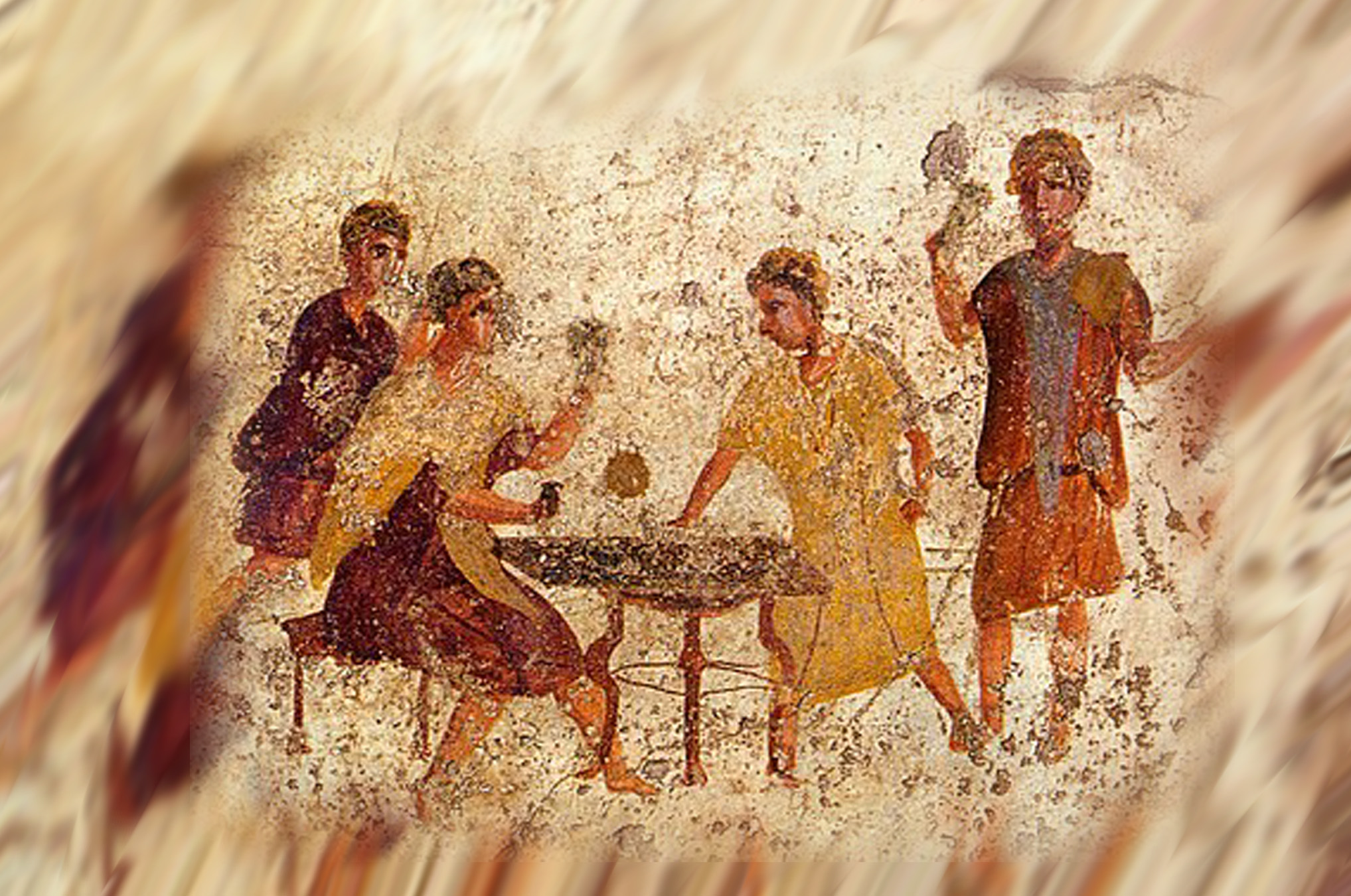
Is Left Center Right a drinking game or a form of gambling? Yep, and history has some clues
Left Center Right (sometimes called “Right, Center, Left” or just “LCR”) is a form of gambling like any game of chance. Whether it’s a sinister form of gambling that leads to addiction or other problems is purely up to the participants.
You could play Left Center Right with candy, coins, poker chips (you’d need at least nine for three players) or dollar bills, so long as all the items you’re passing around are of the same value.
LCR Pro Tip: If playing for money, use all fives, tens, or other denominations. Or if playing with candy, all the same flavor of Jolly Rancher or the same quantity of M&Ms.
How is Left Center Right not a form of gambling then?
We argue the stakes for LCR to qualify as gambling don’t rise to the sort of problematic levels posed by other addictive games. Simply because LCR is a game of chance with uniquely even odds. Unlike poker, slot machines, or other games where the math works out to slightly favor the dealer or house (like Blackjack), LCR is mathematically consistent and even.
To say LCR rises to a harmful level of crooked or fixed gambling would mean games like Rock Paper Scissors are also as harmful as slot machines.
Typically, gambling games are part of these categories:
- Card-based
- Dice-based
- Skill-based
- Trivia or word play
- Video games
- App-driven (with randomized prompts)
What about LCR as a drinking game?
Drinking games are generally games of chance or games of skill that almost behave as purely chance (like beer pong).
Drinking games aren’t new. Likely, Mark Twain would have been familiar with billiard ball, where players take a sip each time a ball is pocketed. Or drinking chants that formed a sort of “musical chairs” of drinking in Medieval Europe. And before that, the ancient Greeks and Romans flinging wine at targets as part of Kottabos banquets and games.
None of dice gaming culture is new or exclusive to modern gamers
- People in Mesopotamia were playing with clay dice they called “knucklebones”, with tablets holding tally marks.
- Soldiers and merchants made casual bets with dice games, and so did the Egyptians with Senet boards, the Chinese with pai gow domino games (which later evolved into games like Mexican Train Dominoes), and the Greeks with “kube” dice that were as popular as the Colosseum itself.
Come the American Revolution and American Century, mechanized machines and automated systems for gambling and gaming like horse betting and lotteries were widespread. But the mechanization of gambling also provided solitary, low-skill gambling. Unlike card games where your odds improve by knowing when to play or fold, or horse betting that requires being at the track, technology has made gaming an addictive, solitary, and instantaneous feedback loop.
Far be it for us to say that’s entirely a bad thing. You can play Left Center Right for free, no apps or downloads required, in your browser right now on our site. But unlike solitary games that reward people with either virtual tokens or actual cash, our game has no real stakes. It’s just a pastime.
Like using LCR as a gambling game for cash, or as a drinking game with friends, the line between casual fun and harmful impact on others is up to individual players.